
New Yea
🔆 Since the New Year is the beginning of the days of the year, on this day one should implant in the soul such thoughts, feelings and dispositions that could direct all deeds throughout the year in a manner worthy of a Christian. We will understand this immediately as soon as we reflect on what the “New Year” means in spiritual life. In spiritual life, the New Year comes when a person living carelessly begins to strive for salvation and pleasing God. For when a person resolves to do this, everything within and around him is restructured anew, on new foundations — the old passes away, and everything becomes new. If you already have this state, renew it; if not — give birth to it — and you will have a New Year.
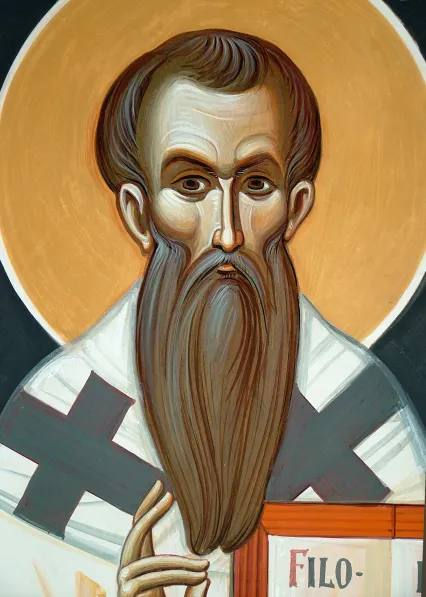
In the same spirit approaches the worthy celebration of the Circumcision of the Lord and the memory of Saint Basil the Great. The essence of the mentioned change consists in the fact that from this moment on, a person begins to live exclusively for God and his salvation, whereas before he lived only for himself, preparing his own destruction. Here he leaves former habits, all pleasures and all in which he found delight; he cuts off passions and lustful dispositions and takes on works of strict self-denial. Such a change accurately represents what, according to the Apostle, the circumcision of the heart should be — a truth of which the feast of the Circumcision of the Lord reminds us and to which it obligates us, and of which Saint Basil the Great is an example.
Thus, all concepts filling our consciousness on New Year converge at one point — our internal renewal through the circumcision of the heart. If it pleases the Lord for someone to attune himself in this way for the New Year — that is, not only to think this way, but also to embody it in life — that person will celebrate the New Year in the most perfect Christian manner and will be ready to spend the entire year as a Christian. Next New Year he will only need to renew and revive what he has accepted now.
Saint Theophan the Recluse



Comments